Macroeconomic stability gets the headlines. Human capital tells you how people are faring. But if you want to understand whether an economy can sustain growth, you have to look at something deeper: Infrastructure—and the real economy it supports. Because ultimately, no economy grows on policy alone. It grows on power, roads, production, logistics, and industrial capacity. And this is where Nigeria’s reform story (see Infrastructure & Real Economy On: Dashboard) becomes both promising—and unfinished.
The Foundation: Capacity Is Expanding
At a high level, the direction is clear.
- Peak power generation has reached a record 6,003 MW
- Installed capacity stands at about 12,500 MW
- Oil production has recovered to roughly 1.6 million barrels per day
- Gas reserves sit at a massive 206 trillion cubic feet
- Road infrastructure spans 35,000 km, with significant rehabilitation underway
- Ports now handle around 90 million tonnes of cargo annually
This is not trivial. It suggests that Nigeria is beginning to rebuild its productive backbone—the physical systems that enable economic activity.
The Power Story: Progress with Constraints
Nowhere is the story clearer—or more revealing—than in power. There has been real movement:
- Generation has increased from roughly 4,200 MW to over 6,000 MW
- Private investment is being mobilized—about $7 billion so far, with a long-term target of $122 billion
- The Electricity Act has unlocked state-level markets, now active in at least 15 states
- Mini-grids are expanding, with over 100 installations improving rural access
But the constraint remains obvious. There is a gap between installed capacity, transmission capacity, and actual delivered power:
- Installed: ~12,500 MW
- Transmission: ~7,500 MW
- Peak generation: ~6,000 MW
That gap is the real story. Nigeria does not just have a generation problem. It has a system efficiency problem. Until transmission, distribution, and market structure catch up, increases in generation will continue to under-deliver at the consumer level.
Oil, Gas, and Energy: From Extraction to Utilization
Nigeria’s energy sector is also undergoing a subtle but important shift.
- Oil production has climbed back above OPEC quota levels
- Domestic refining capacity has surged to about 650,000 barrels per day, driven by the operationalization of large-scale refining
- Gas production is expanding, supported by infrastructure like the AKK pipeline
- Major investments—over $40 billion—are being committed across upstream and gas monetization projects
This marks a transition from exporting raw resources to: processing, refining, and utilizing them domestically. That shift matters for:
- Industrialization
- Energy security
- Foreign exchange stability
But like power, the challenge is not just capacity—it is integration into the wider economy.
Agriculture: Scale Without Productivity
Agriculture remains one of Nigeria’s largest sectors:
- Contributing roughly 23% of GDP
- Engaging tens of millions of workers
- Supported by over 34 million hectares of cultivated land
Government spending has increased sharply—up over 260% in recent years—and initiatives like agro-processing zones are beginning to take shape. Rice production, for example, is now around 7.5 million tonnes annually. But the core issue persists: Productivity.
Yield levels for key crops still lag significantly behind global averages. This creates a paradox:
- Large land
- Large workforce
- But low output per hectare
Until that gap closes, agriculture will remain labour-intensive but low-value—limiting its ability to drive broad-based prosperity.
Manufacturing and the Digital Economy: Untapped Potential
In manufacturing, the signals are mixed—but encouraging.
- Capacity utilization is improving, now around 55–60%
- The sector contributes roughly 9–10% of GDP
- Industrial parks are expanding
- About 12 million Nigerians are employed in the sector
At the same time, the digital economy is emerging as a major growth driver:
- ICT contributes about 18% of GDP
- Mobile subscriptions exceed 220 million
- Internet penetration is just above 50%
- The country hosts over 3,000 tech startups
This is where Nigeria’s future growth potential is most visible. But again, the constraint is structural: Manufacturing depends on power and logistics. Digital growth depends on infrastructure and connectivity depth. Without those, both sectors grow—but below potential.
Transport and Logistics: The Hidden Bottleneck
If there is one area where constraints are most visible, it is logistics.
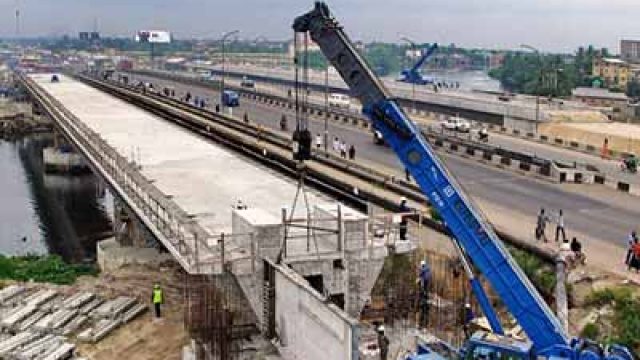
- Nigeria has about 35,000 km of federal roads, with over 13,000 km under rehabilitation
- Rail networks are expanding, now around 3,900 km
- Ports handle significant cargo volumes, supported by new infrastructure like deep-sea ports
- Air traffic has recovered to about 17 million passengers annually
Yet despite this:
- Logistics performance remains weak globally (around rank 88)
- Transport costs remain high
- Movement of goods is still inefficient
This matters more than it seems. Because logistics is the bridge between production and markets. If that bridge is weak, everything else—agriculture, manufacturing, trade—loses efficiency.
The Real Economy Puzzle
When you put all of this together, a clear pattern emerges: Nigeria is building capacity across multiple fronts:
- Power
- Energy
- Agriculture
- Industry
- Transport
But the system is not yet fully connected or optimized. That is the difference between having infrastructure and having functional economic systems
The Bottom Line
Nigeria’s real economy challenge has fundamentally evolved. For President Tinubu, it is no longer just about building infrastructure—it is about ensuring that infrastructure translates into affordable, scalable, and productive economic activity.
The country has made clear progress in assembling the core assets: power generation is rising, transport networks are expanding, domestic refining is coming onstream, and investments are flowing into key sectors. But assets alone do not drive growth—systems do. What matters now is how efficiently these assets interact—and how well they are supported by the broader, often less visible layers of the real economy:
- whether power is reliable enough to reduce production costs
- whether roads and ports move goods efficiently
- whether businesses can access affordable finance to scale
- whether the cost of doing business allows firms to compete
- whether labour is productive and skills-aligned
- whether the vast informal sector is integrated into formal value chains
- and whether Nigeria can compete in trade through value addition, not just raw output
At present, that translation remains uneven. The economy still absorbs too much cost, loses value across supply chains, and operates below its potential—not because capacity is absent, but because efficiency, integration, and competitiveness are incomplete.
That is the inflection point.
Nigeria is moving from a phase of infrastructure accumulation to one that must deliver economic optimization across finance, productivity, trade, and enterprise dynamics.
And that transition- turning assets into outcomes, capacity into productivity, and systems into a connected, competitive economy- is what President Tinubu and his team are determined to do to ensure the real economy expands enough to transform at scale.
By Web Admin