
Governance, Institutions & Democracy
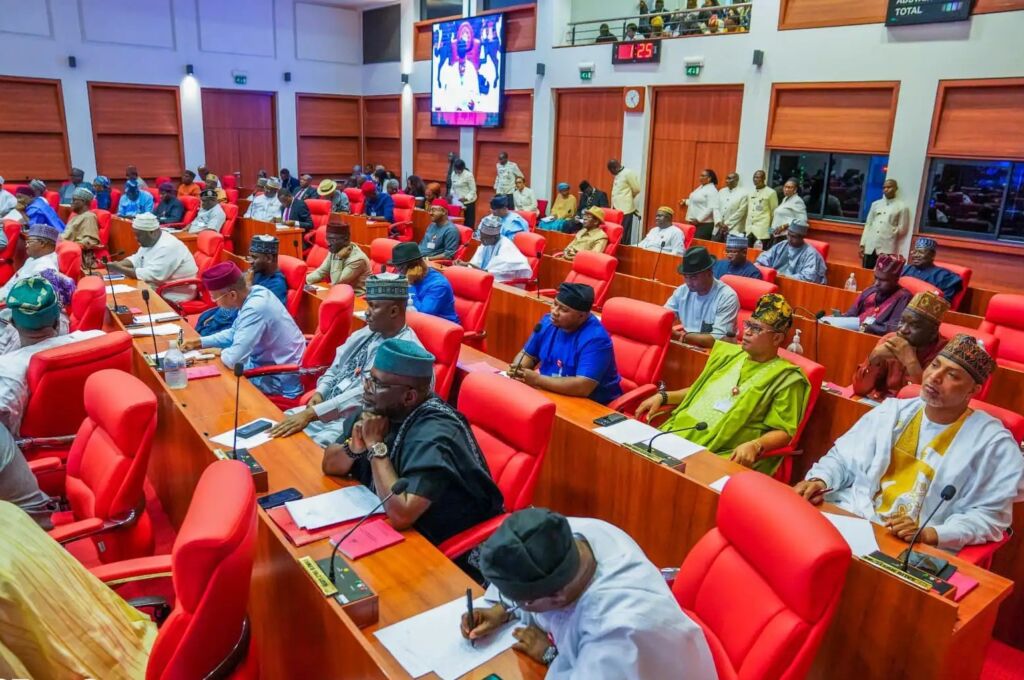
Building the Trust That Makes Reform Last
Economic reform only holds when institutions are credible. The Tinubu Administration has worked to strengthen the agencies, processes, and structures through which government accountability is exercised — because without trust in institutions, no other reform can deliver its full promise.
What Has been Done
Record anti-corruption enforcement. The Economic and Financial Crimes Commission secured 7,503 convictions in the first two years of the administration — the highest in the agency’s 22-year history — and recovered over ₦566 billion in assets alongside $411 million in foreign currency. In 2024 alone, 4,111 convictions were recorded, surpassing any single year on record. Recovered funds have been reinvested into the Student Loan and Consumer Credit schemes.
Fiscal transparency strengthened. Ways and Means financing has been discontinued. The Auditor-General’s office is being equipped with digital tools. All government transactions are moving to traceable payment systems. A new national fiscal policy framework — covering taxation, borrowing, and expenditure discipline — is now in place. A Tax Ombudsman is being established to protect taxpayers and ensure the system is applied fairly.
Local government autonomy secured. In July 2024, the Supreme Court — acting on a suit brought by the federal government — delivered a landmark ruling granting Nigeria’s 774 local government areas direct access to their federal allocations. Governors can no longer withhold or control funds constitutionally designated for local councils. Over ₦4.5 trillion has been disbursed to local governments since the ruling, and more than 30 states conducted council elections in response.
Budget discipline restored. The 2026 Budget — at ₦58.18 trillion, the largest in Nigeria’s history — comes with explicit accountability directives to the Finance Minister, Accountant-General, and Budget Office to ensure implementation matches appropriation. The President has been direct: “The greatest budget is not the one we announce. It is the one we deliver.”
Sovereignty ratings improving. Fitch upgraded Nigeria’s sovereign rating to B with a stable outlook. Moody’s raised its issuer rating to B3. Both cited improved economic governance, clearer policy direction, and greater institutional predictability as the basis for the upgrades.
What It Means For Nigerians
Government that can be held to account delivers more. When anti-corruption agencies operate independently, public funds go further. When local governments control their own allocations, communities get services faster. When budgets are executed as approved, citizens get the infrastructure and welfare they were promised. These reforms are about making government work — not just announcing that it will.
Governance, Institutions
& Democracy
How governance reforms are rebuilding trust, strengthening transparency, and securing the democratic foundations on which all other reforms succeed.
December 2024: Final forfeiture of a 150,500 sq metre estate in Abuja containing 753 duplexes and apartments. Handed over to Ministry of Housing by May 2025.
5,081 cases filed in court. EFCC received Senate’s unanimous commendation — the first time such recognition has been unanimous in the Senate’s history.
Recovered proceeds reinvested into the Student Loan Scheme and Consumer Credit Scheme — turning corruption proceeds into opportunity for citizens.
Supreme Court ruling upheld EFCC’s anti-corruption mandate. Administration committed to non-interference with judicial and anti-graft agency operations.
Nigeria improved from 25 to 26 points, rising from 145th to 140th globally in 2024 — the first improvement in several years.
EFCC targets surpassing ₦1T in 2025, building on ₦364.6B cash recovered in 2024 alone — enough to fund five state budgets combined.
FAAC Revenue to States Increased
Federation Account allocations to states grew by 60% under Tinubu, enabling more local development projects and reducing state government fiscal stress.
Largest Budget in Nigeria’s History
2026 Appropriation Bill presented with ₦26.08T in capital expenditure and strict directives on budget execution accountability and timeline compliance.
Independent Taxpayer Protection Office
A Tax Ombudsman being established — an independent institution to protect vulnerable taxpayers and ensure the system works for every Nigerian, especially small businesses.
NYSC Stipend Increased
Youth Corps monthly stipend raised from ₦33,000 to ₦77,000 — a 133% increase, boosting youth morale and reflecting the government’s investment in the next generation.
Presidential Performance Monitoring
President Tinubu directed monthly KPI reports from the Head of Service and quarterly meetings with all Permanent Secretaries — tying civil servant performance to measurable outcomes.
First Sukuk Bond Fully Repaid
Nigeria fully repaid its first N100 billion Sukuk issued in 2017 — a signal of fiscal credibility, improving sovereign trust and access to ethical Islamic finance instruments.
Supreme Court LGA autonomy ruling; EFCC independence upheld; judicial welfare improved; Technology Act for judiciary; anti-corruption framework strengthened.
Ways & Means discontinued; unified FX; budget KPIs; Tax Ombudsman; Auditor-General’s office strengthened; digital payment systems for government transactions.
LGA financial autonomy ruling enforced; 30+ states held council elections; direct FAAC payments to 774 councils targeted; caretaker committees declared illegal.
Record 7,503 EFCC convictions; ₦566B assets recovered; Transparency International ranking improved; recovered funds reinvested into social programmes.
📋 Key Accountability Commitments & Mechanisms
Sources: Statehouse.gov.ng (EFCC NJI Workshop, Oct 2025; 2026 Budget presentation, Dec 2025); Tinubu mid-term scorecard (May 2025); Senate EFCC commendation (Oct 2025); Dataphyte LGA analysis (Aug 2025); Vanguard / Punch / EFCC Chairman reports; Transparency International CPI 2024; Investors King (EFCC annual report 2024); ConstitutionNet Supreme Court ruling (Jul 2024); Gov. Uzodimma address, PGF Summit, Feb 24, 2026