
Infrastructure & Real Economy
Building the Foundations of Commerce and Growth
No economy grows without power, roads, and productive capacity. The Tinubu Administration has made infrastructure investment a central priority — not as an end in itself, but as the mechanism through which jobs are created, goods move, businesses operate, and communities connect to opportunity.
What Has Been Built
Power generation increased. Average electricity generation has grown from 4,200 MW in May 2023 to a record 6,003 MW in March 2025. The Electricity Act and its 2025 amendment have devolved generation, transmission, and distribution powers to states, with 15 states now activating independent electricity markets. Over $7 billion has been mobilised for the power value chain, with a long-term investment target of $122 billion through 2045.
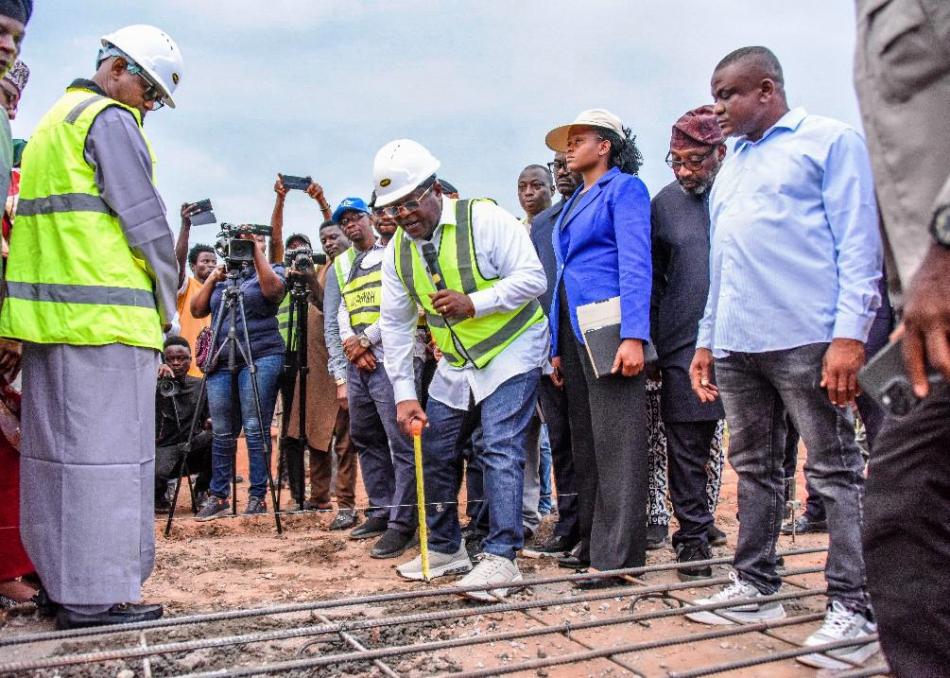
Major road corridors underway. More than 13 highway corridors are under active construction, with a deliberate shift from asphalt to concrete — extending road lifespan from decades to a century. The Lagos-Calabar Coastal Highway (700 km), the Sokoto-Badagry Superhighway (1,068 km across seven states), and the Abuja-Lokoja-Benin corridor are among the flagship projects. A ₦100 billion CNG bus programme is lowering transport costs for commuters and businesses.
Agriculture funded at historic levels. The agriculture budget has grown from ₦228.4 billion in 2023 to ₦826.5 billion in 2025 — a 261% increase. Agriculture now accounts for 25.59% of GDP. Over 225,000 metric tonnes of fertiliser have been distributed, and a $510 million Special Agro-Industrial Processing Zones programme — backed by the African Development Bank, Islamic Development Bank, and IFAD — is creating industrial-scale food processing capacity across six geopolitical zones.
Oil production recovering. Crude oil production has risen from approximately 1 million barrels per day in 2023 to 1.5 million barrels per day, supported by suppression of oil theft, pipeline security operations, and the ramp-up of local refining capacity.
What It Means For Nigerians
Better roads cut the cost of moving goods and reduce journey times. More reliable power lowers production costs for businesses and households alike. A stronger agricultural sector means more food, more rural jobs, and greater food security. These are not projects for the future — construction is active, outputs are measurable, and the economic impact is already being felt.
Infrastructure &
Productive Economy
How investment in roads, power, agriculture, housing, and energy is unlocking growth — projects people can see, use, and benefit from.
First-ever decentralisation of electricity from Exclusive to Concurrent Legislative List. States can now license, generate and distribute power.
10 mobile substations, three 75/100MVA transformers, and seven 60/66MVA transformers delivered — adding 984MW of transmission capacity.
N66/kWh raised to N225/kWh for Band A users (20hrs supply/day guaranteed) — improving revenue recovery and investor confidence.
First comprehensive 21-year roadmap in 24 years approved by FEC — diversifying Nigeria's energy mix from hydro and gas to include utility-scale solar.
First time in Nigeria's history all three segments of the electricity value chain — generation, distribution, and transmission — have been fully deregulated.
63MVA substations commissioned in Oyo, Ogun, Okene, Amukpe, Potiskum, Apo, Ihovbor; 100MVA transformer at Maryland Lagos; 60MVA at Ajah.
Sokoto-Badagry Superhighway
Linking Nigeria's northern and southern regions across 7 states. Multiple sections flagged off. Rail component planned alongside the highway corridor.
East-West Road (Bodo-Bonny, Rivers State)
Originally awarded 2014. Fresh N280B approval under Tinubu in September 2024. Revised completion: September 2025. Unlocks Bonny Island to mainland connectivity.
Enugu-Onitsha Expressway
Reconstructed under MTN Tax Credit Scheme at no federal cost. Dual-carriageway with concrete pavement. Addresses decades of road neglect in the South-East.
Second Niger Bridge Access Road
Access roads connecting the bridge to key transport corridors. Construction commenced March 2025. Completes the South-East to South-South connectivity project.
Trans-Sahara Trade Route
Connecting Calabar to Abuja via Ebonyi, Benue, Kogi, and Nasarawa. A 4th legacy project. Accelerated design on Akwanga-Jos-Bauchi-Gombe corridor now underway.
Ibadan-Ilorin Road (Kwara)
Previous contract terminated due to slow progress. Re-awarded to JRB Construction at N147.89B. Expected to boost economic activity across Oyo and Kwara States.
Sources: Federal Ministry of Works (Umahi briefings, 2024–2025); Vanguard/Nation/Nairametrics road project reports; Minister of Power Adelabu (WA Energy Summit, Dec 2025); Blueprint/NBS Agriculture GDP Q4 2024; African Development Bank SAPZ Groundbreaking, April 2025; UNDP Nigeria Electricity Act 2023 review; Gov. Uzodimma address, PGF Summit, Feb 24, 2026